ATLAS gets an edge on nuclear structure
1 October 2026 | By
The ATLAS Collaboration reports the first observation that nucleons near the edge of a nucleus have a different internal structure than those near its centre.
An atomic nucleus is more complex than a collection of individual protons and neutrons. When high-energy physicists look inside a nucleon, they find that the momentum distribution of its constituent quarks and gluons (or partons) is altered simply from being bound inside a nucleus. This effect was first observed by the EMC Collaboration in 1982 and its origin has remained an open question in nuclear physics for decades. This modification – described by nuclear parton distribution functions (nuclear PDFs or nPDFs) – was surprising because of the huge difference in scales: the energy that binds a nucleon into a nucleus is tiny compared with the energy needed to resolve the partons inside it.
New results from the ATLAS Collaboration shine light on a novel aspect of this long-standing puzzle. Researchers report the first observation that nucleons near the edge of a nucleus have different PDFs from those near its centre, adding new information to help understand how nuclear PDF modifications occur.
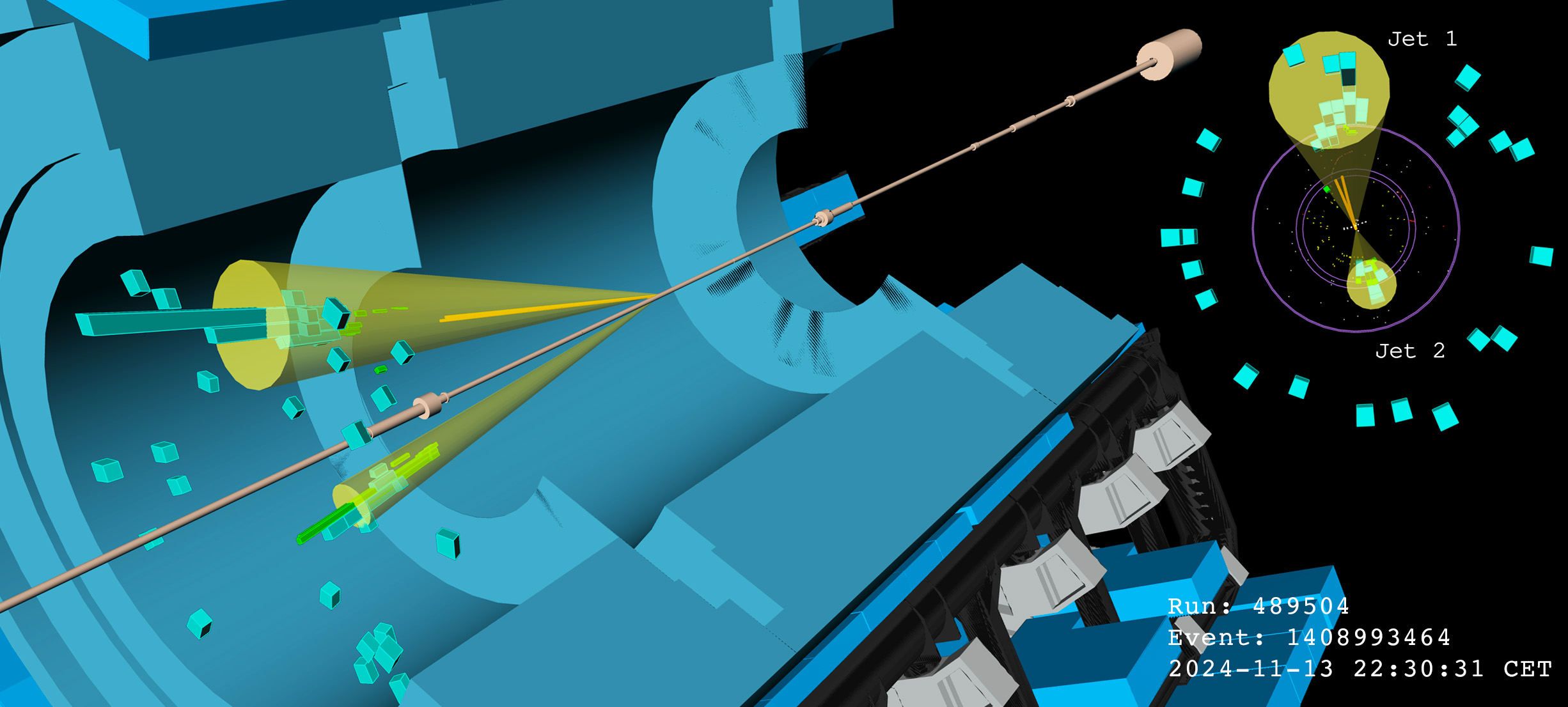
To achieve this observation, the ATLAS team studied ultra-peripheral collisions of lead ions at the LHC. Unlike in head-on collisions, the ions glance past one another without overlapping, interacting instead through the enormous electromagnetic fields that surround each ion. In photonuclear interactions, a photon emitted by one nucleus strikes the other. These may produce collimated jets of particles whose properties reveal information about the partons inside the struck nucleus.
Typically, these interactions break the nucleus up, resulting in “forward” neutrons that can be detected by ATLAS's zero-degree calorimeters (ZDCs), located 140 metres downstream of the interaction point. However, in about 4% of photonuclear interactions, the photon strikes a single nucleon and leaves the rest of the nucleus whole. These events can be picked out by the absence of forward neutrons on the side of the struck nucleus.
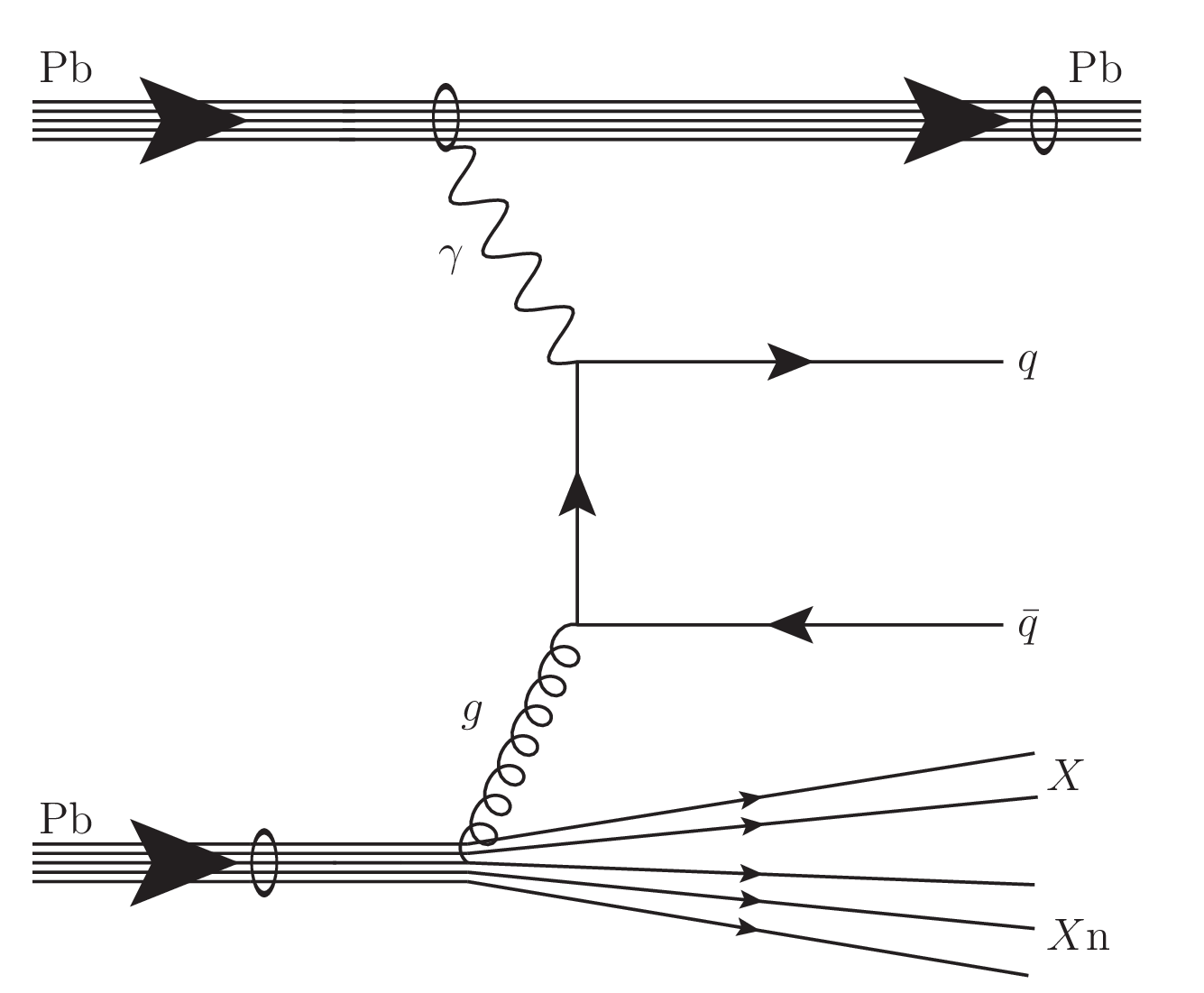
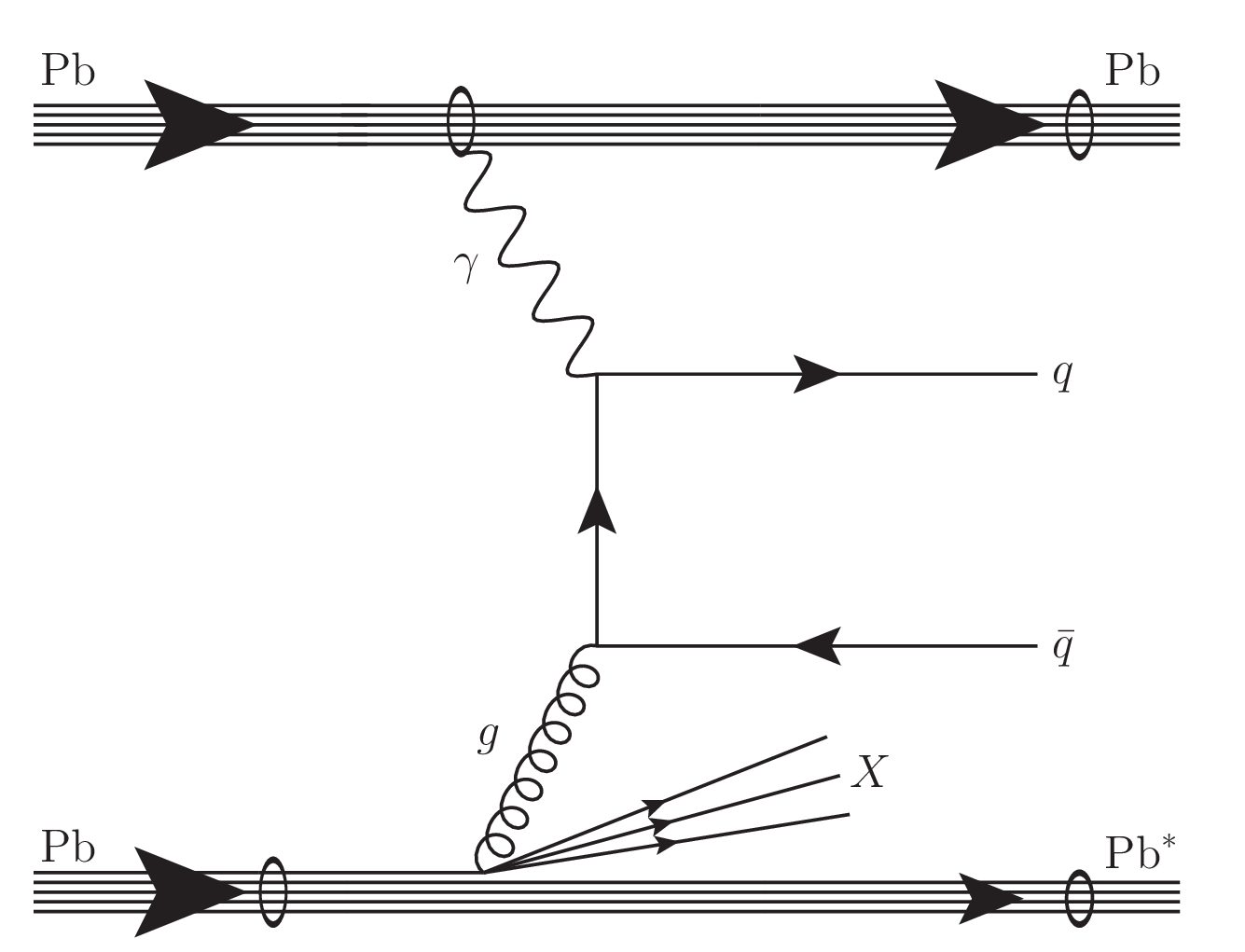
This new ATLAS result marks an important advancement in understanding the distribution of quarks and gluons inside the nucleus.
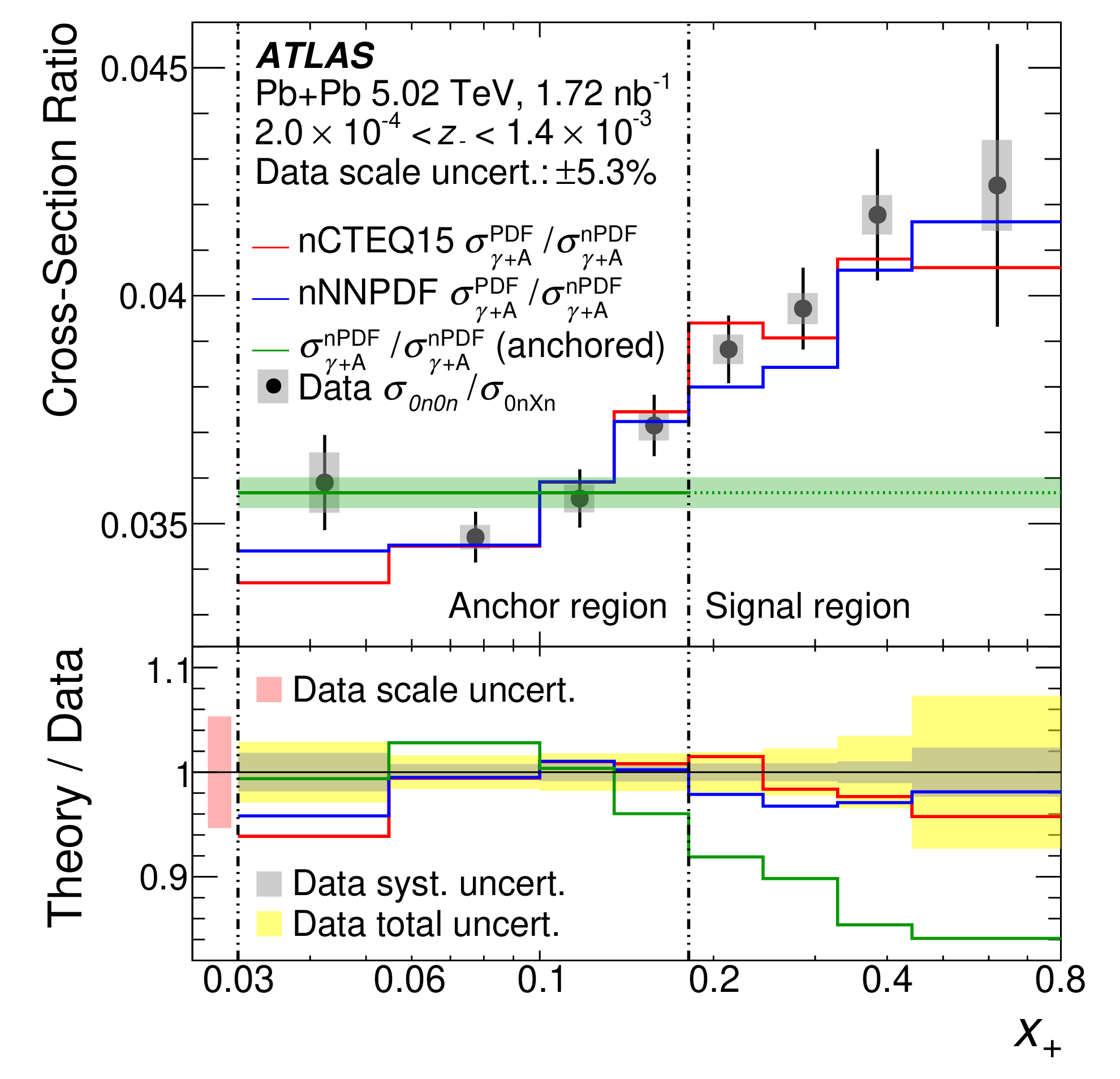
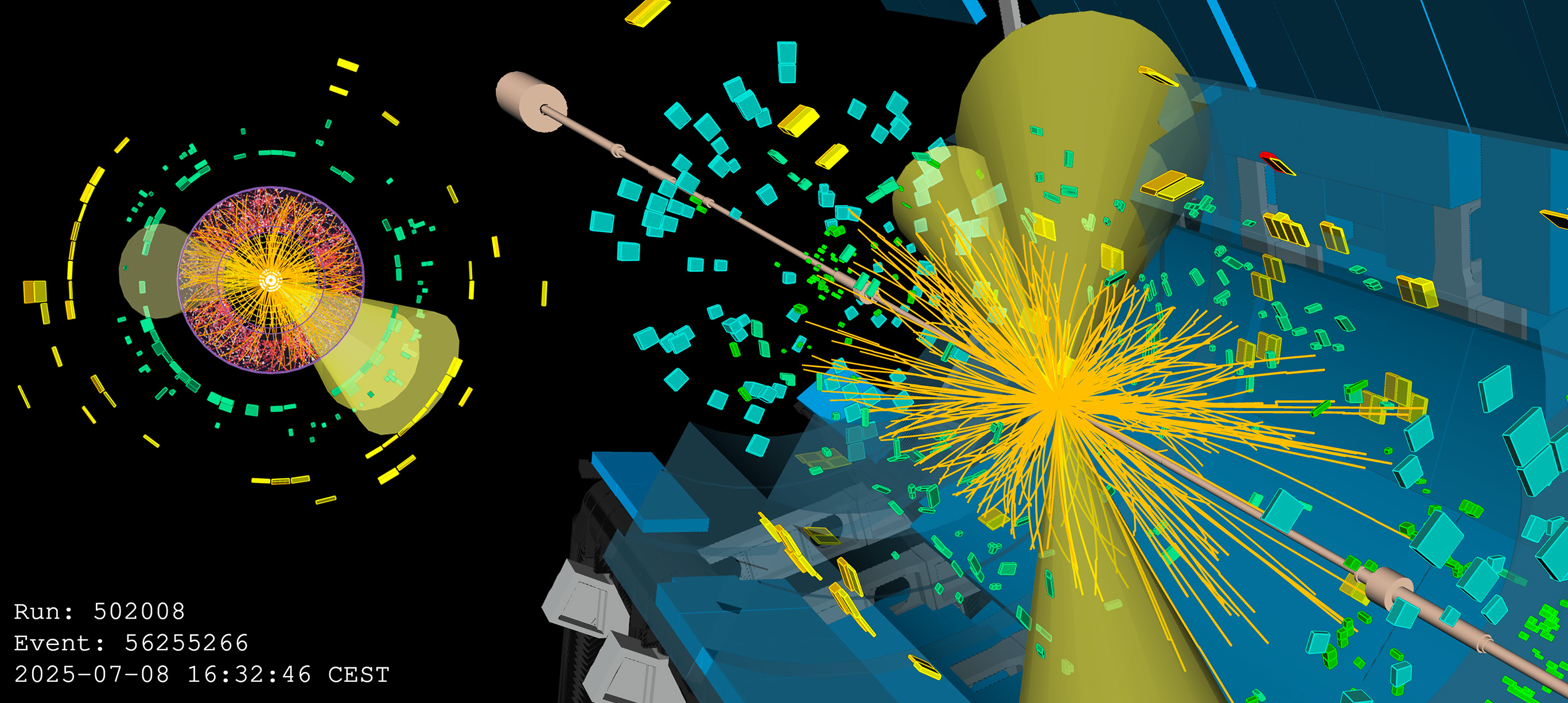
For this study, the ATLAS Collaboration analysed lead-lead collision data recorded in 2018, corresponding to a total integrated luminosity of 1.72 nb⁻¹. To spot these rare events, they selected collisions with at least two jets but little additional activity in the detector, a characteristic of photon-induced processes. They then split the selected events into two classes (see Figure 1): inclusive collisions with forward neutrons (denoted 0nXn), where the struck nucleon can be deeper inside the nucleus, and peripheral collisions without forward neutrons (denoted 0n0n), where the struck nucleon is expected to be at the edge of the nucleus. Using the properties of the measured jet, physicists defined proxy variables for the parton kinematics. One such variable is x+, which provides an estimate for the fraction of the nucleon’s momentum that the struck parton carries.
To spot any change in the PDF modifications, researchers compared the shapes of the x₊ distributions for the two event classes. The ratio of the peripheral and inclusive cross-sections (see Figure 2) shows a clear slope, indicating a significant difference in the nuclear PDF modifications between the two classes, and consistent with theoretical predictions that assume only peripheral events exhibit no PDF modifications. Researchers then performed a statistical test s finding this difference to have a significance of 6.0 standard deviations. This constitutes the first observation that nucleons near the edge of a nucleus have different parton distributions from those near its centre.
The result marks an important advancement in understanding the distribution of quarks and gluons inside the nucleus. It also has broader consequences for measurements involving nuclear collisions, where many observables depend on nuclear PDFs and a position-dependent PDF could impact their interpretation. With the substantially larger Run 3 lead–lead dataset and the future High-Luminosity LHC programme, physicists will be able to push the study of nuclear PDF modifications with much greater precision.
Learn more
- Observation of impact parameter dependent modifications of nuclear parton distributions in photonuclear Pb+Pb collisions at 5.02 TeV with the ATLAS detector (arXiv:2604.20559, see figures)
- DIS2026 conference presentation by Benjamin Gilbert: Probing the transverse structure of nPDF modifications with jet production in ultra-peripheral Pb+Pb collisions with the ATLAS detector
- Measurement of photonuclear jet production in ultra-peripheral Pb+Pb collisions at 5.02 TeV with the ATLAS detector (Phys. Rev. D 111 (2025) 052006, arXiv:2409.11060, see figures)
- Measurement of jet photoproduction in ultra-peripheral Pb+Pb collisions without nuclear breakup at 5.02 TeV with the ATLAS detector (arXiv:2604.24435, see figures)