ATLAS Cheat Sheets
Discover the ATLAS Cheat Sheets
Explore educational physics "cheat sheets" developed by researchers at the ATLAS Collaboration, ideal to help with all those physics terms you want to know more about. With these sheets, you'll explore concepts from the Standard Model to conservation laws.
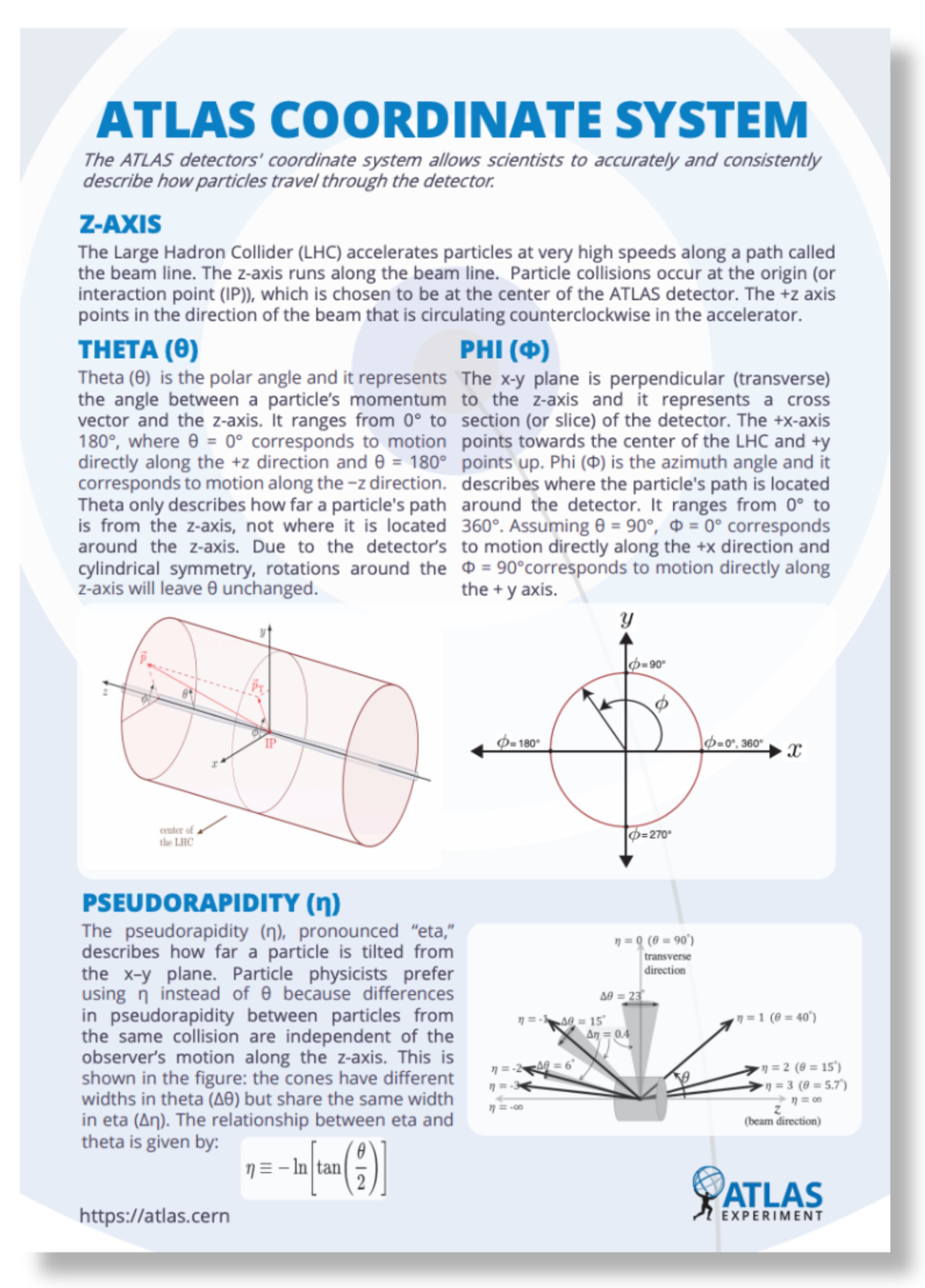
ATLAS Coordinate System
The ATLAS coordinate system allows scientists to accurately and consistently describe how particles travel through the detector.
Keywords: pseudorapidityDownload in English, Czech
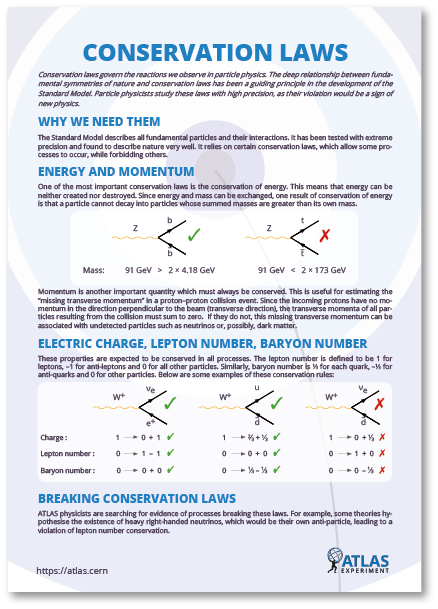
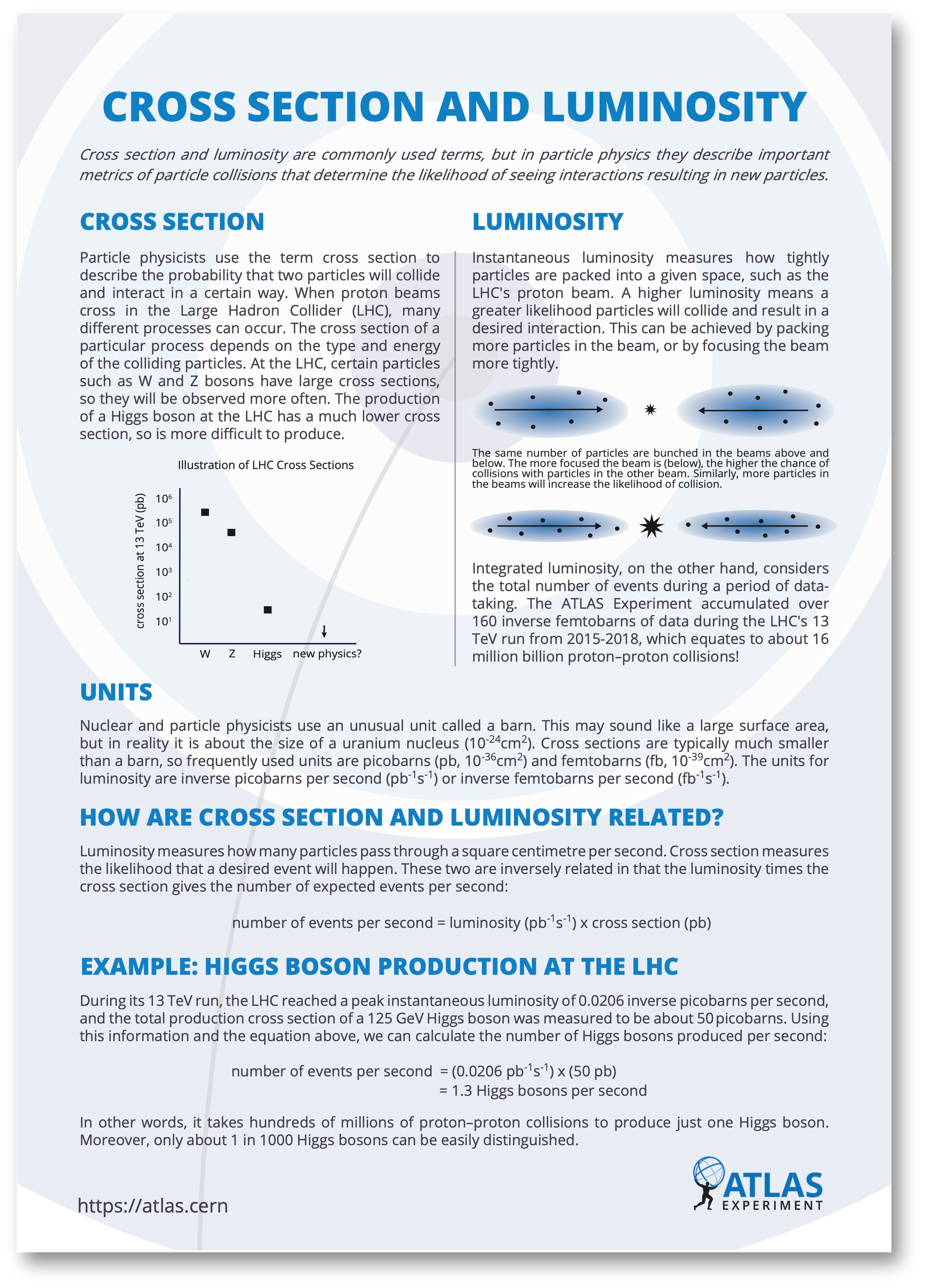
Cross Section and Luminosity
This sheet defines cross section and luminosity, presents examples of LHC cross sections, and introduces the method used to determine number of events.
Keywords: cross section, luminosityDownload in English, German, Italian, Dutch, French, Czech
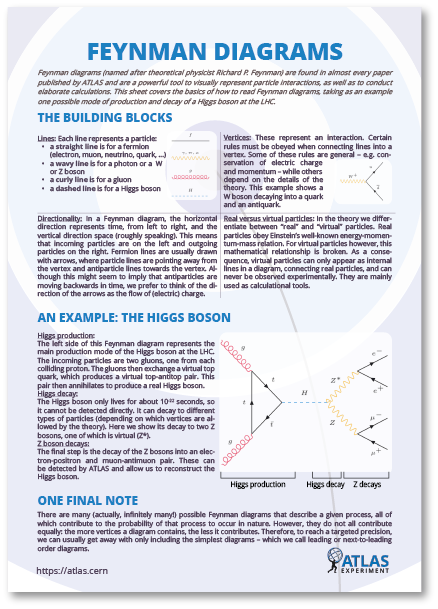
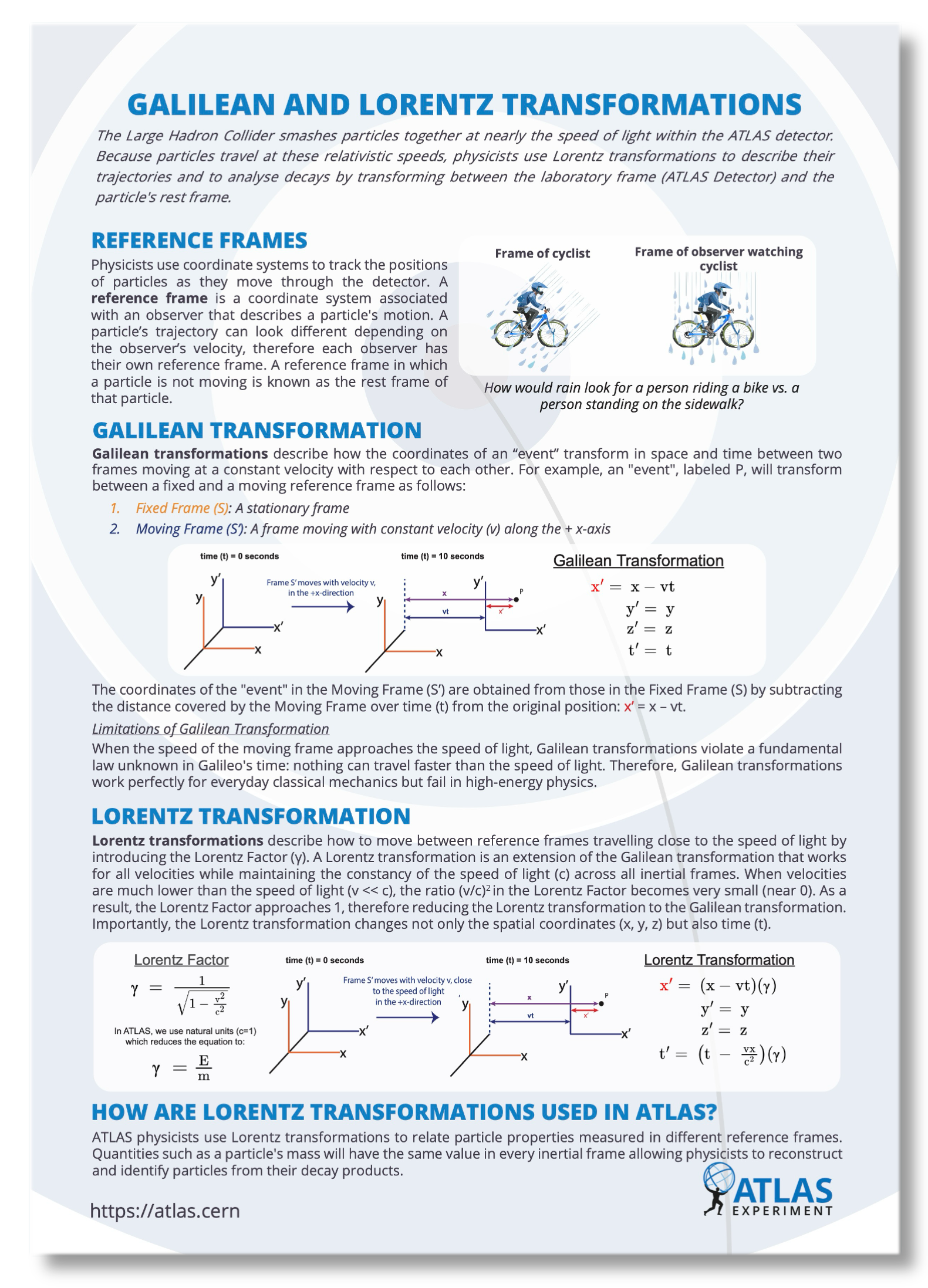
Galilean and Lorentz Transformations
Because particles in LHC collisions travel at relativistic speeds, physicists use Lorentz transformations to describe their
trajectories and to analyse decays by transforming between the laboratory frame (ATLAS Detector) and the
particle's rest frame.
Download in English
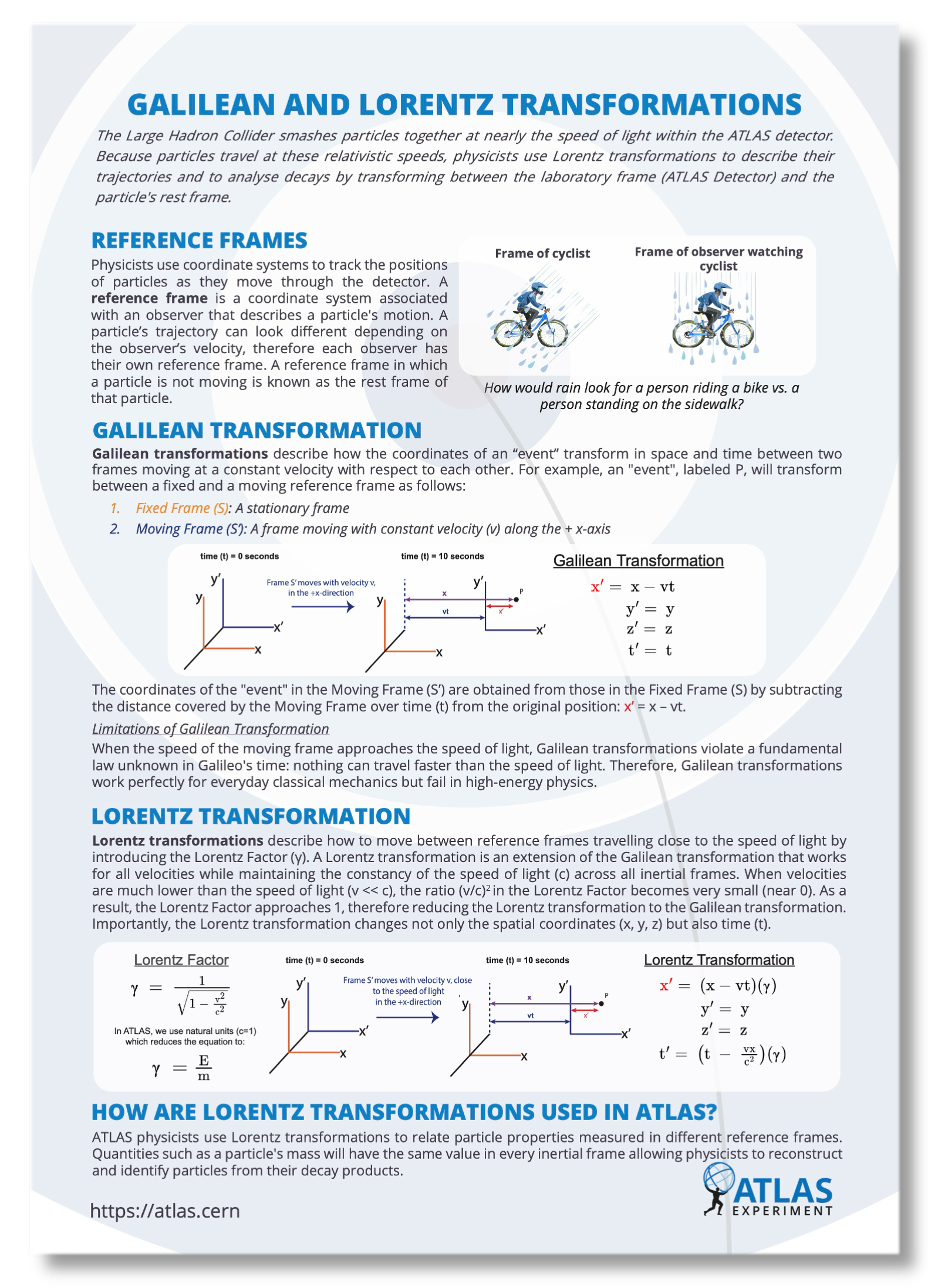
Galilean and Lorentz Transformations
Because particles in LHC collisions travel at relativistic speeds, physicists use Lorentz transformations to describe their
trajectories and to analyse decays by transforming between the laboratory frame (ATLAS Detector) and the
particle's rest frame.
Download in English
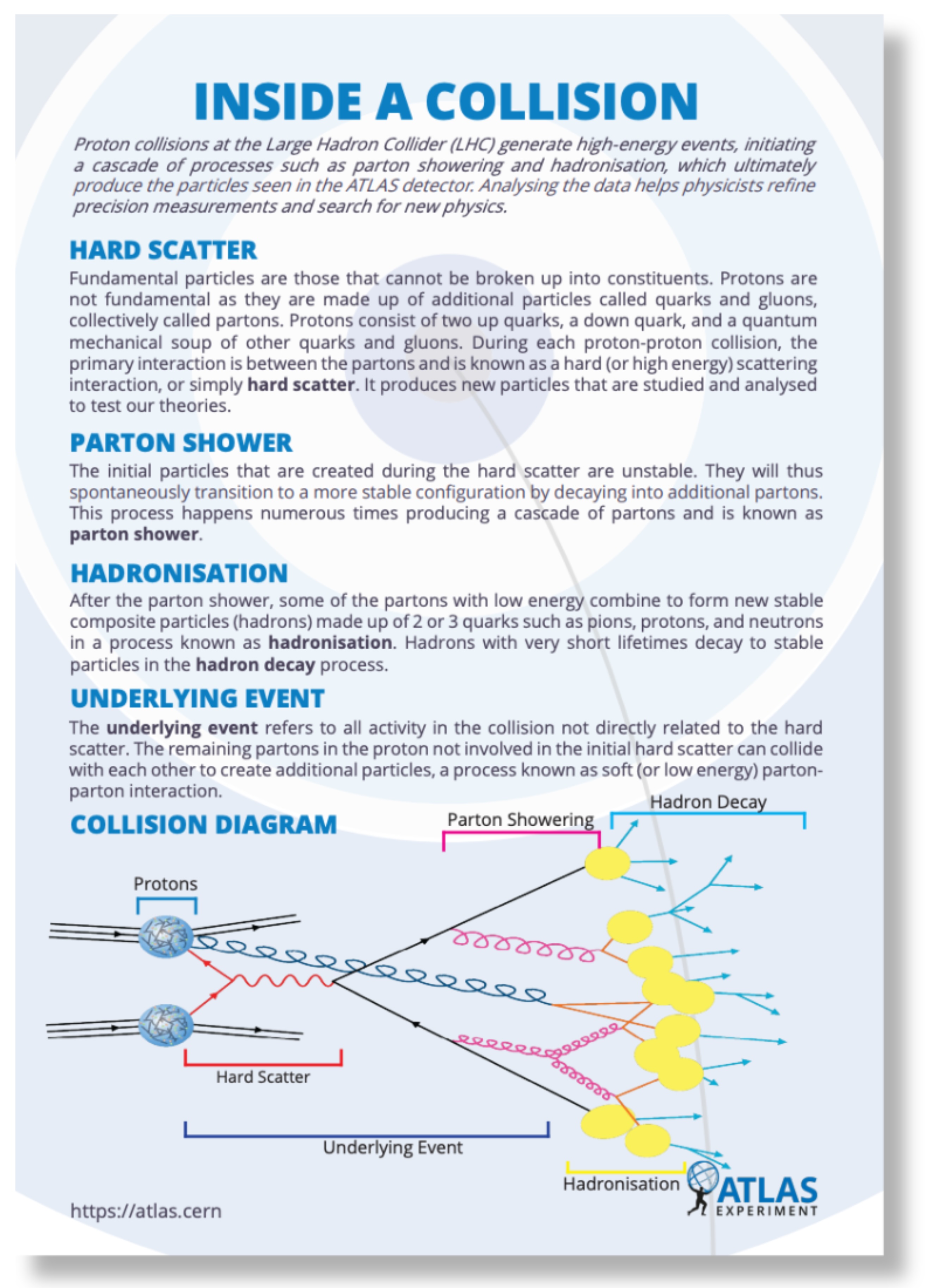
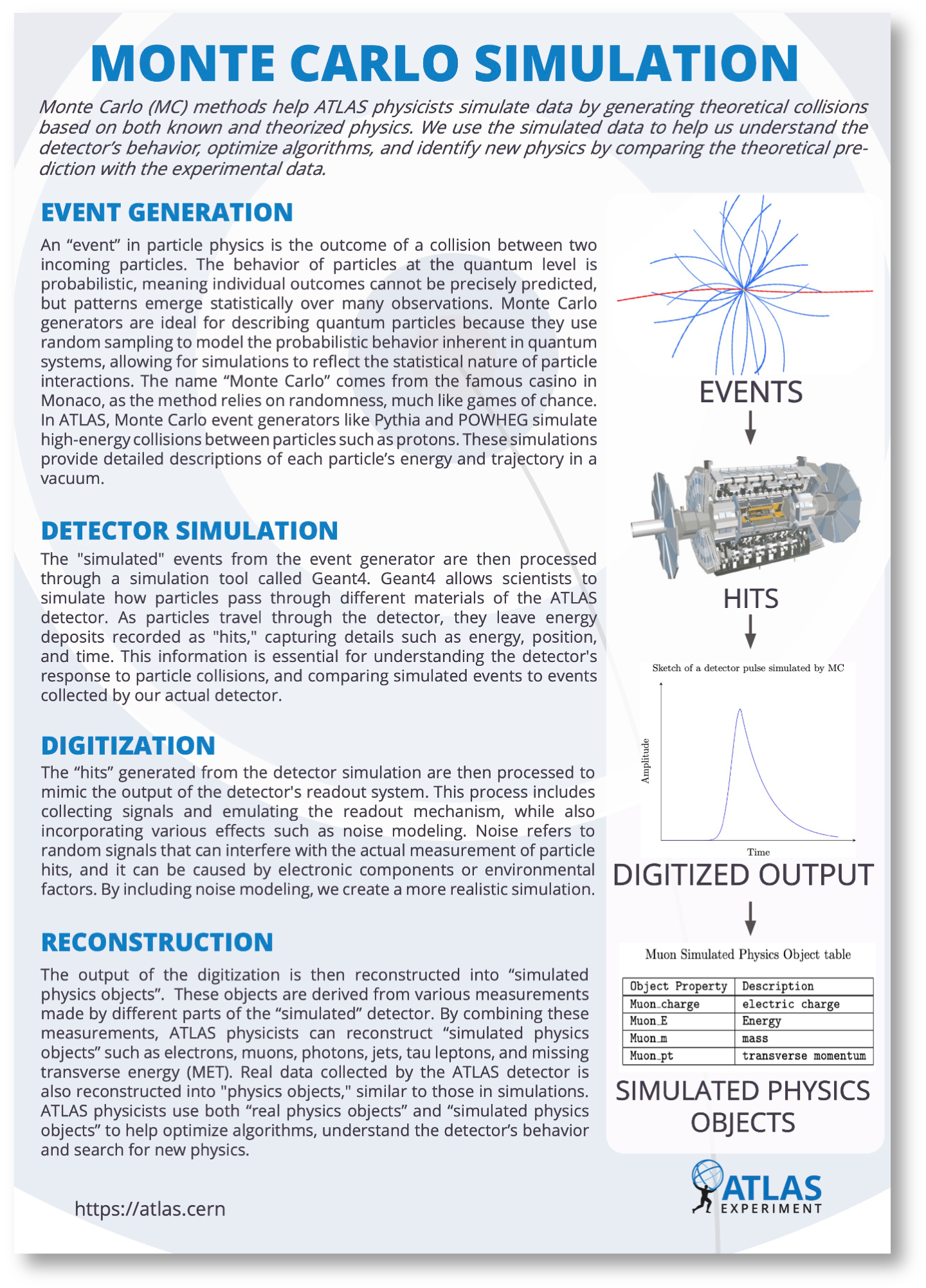
Monte Carlo Simulation
Monte Carlo (MC) methods help ATLAS physicists simulate data by generating theoretical collisions based on both known and theorised physics. We use the simulated data to help us understand the detector’s behaviour, optimise algorithms, and identify new physics.
Keywords: model, event, signal, backgroundDownload in English, German, Czech
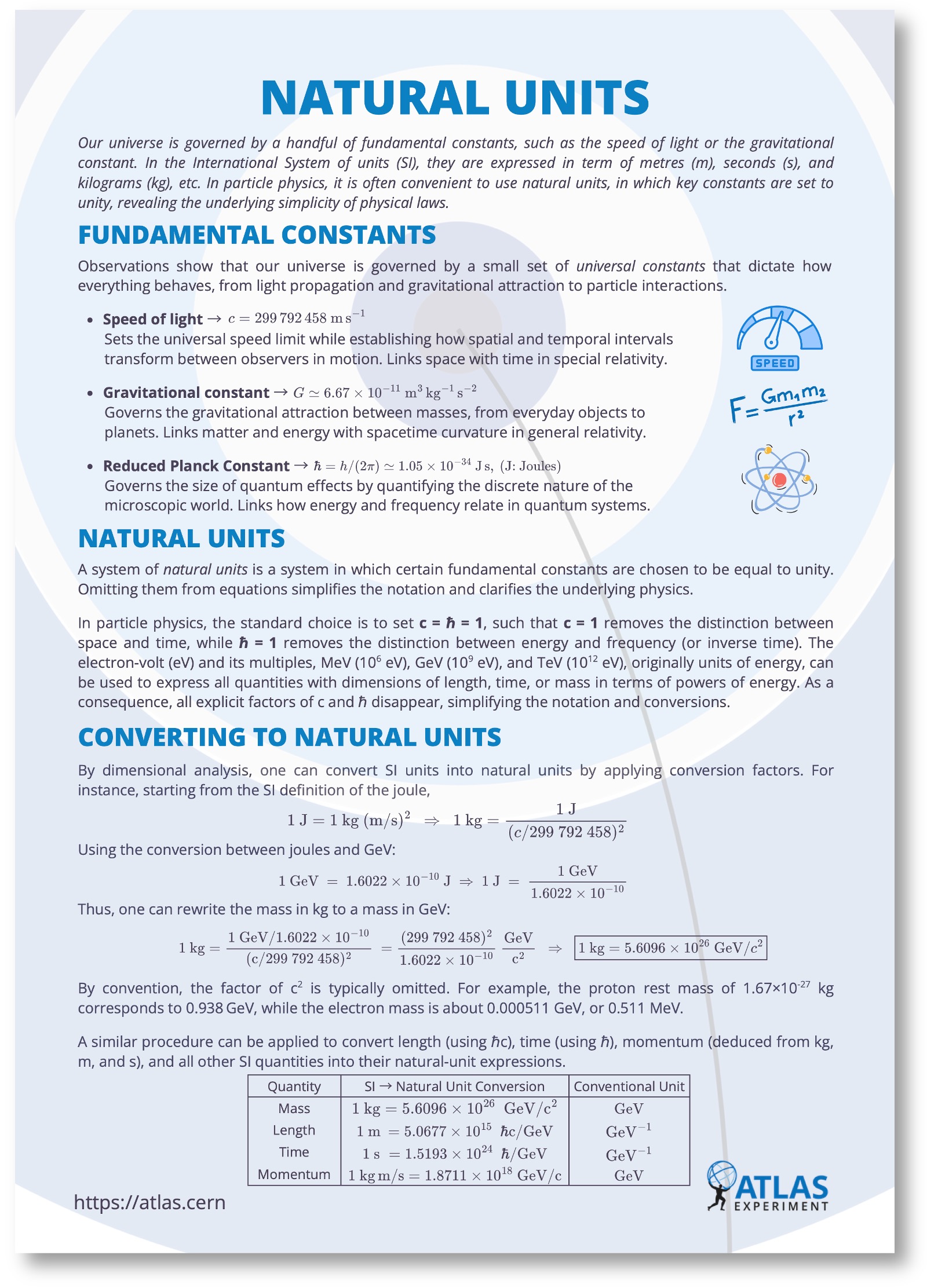
Natural Units
Our universe is governed by a handful of fundamental constants, such as the speed of light or the gravitational constant. In particle physics, it is often convenient to use natural units, in which key constants are set to unity, revealing the underlying simplicity of physical laws.
Keywords: Natural UnitsDownload in English
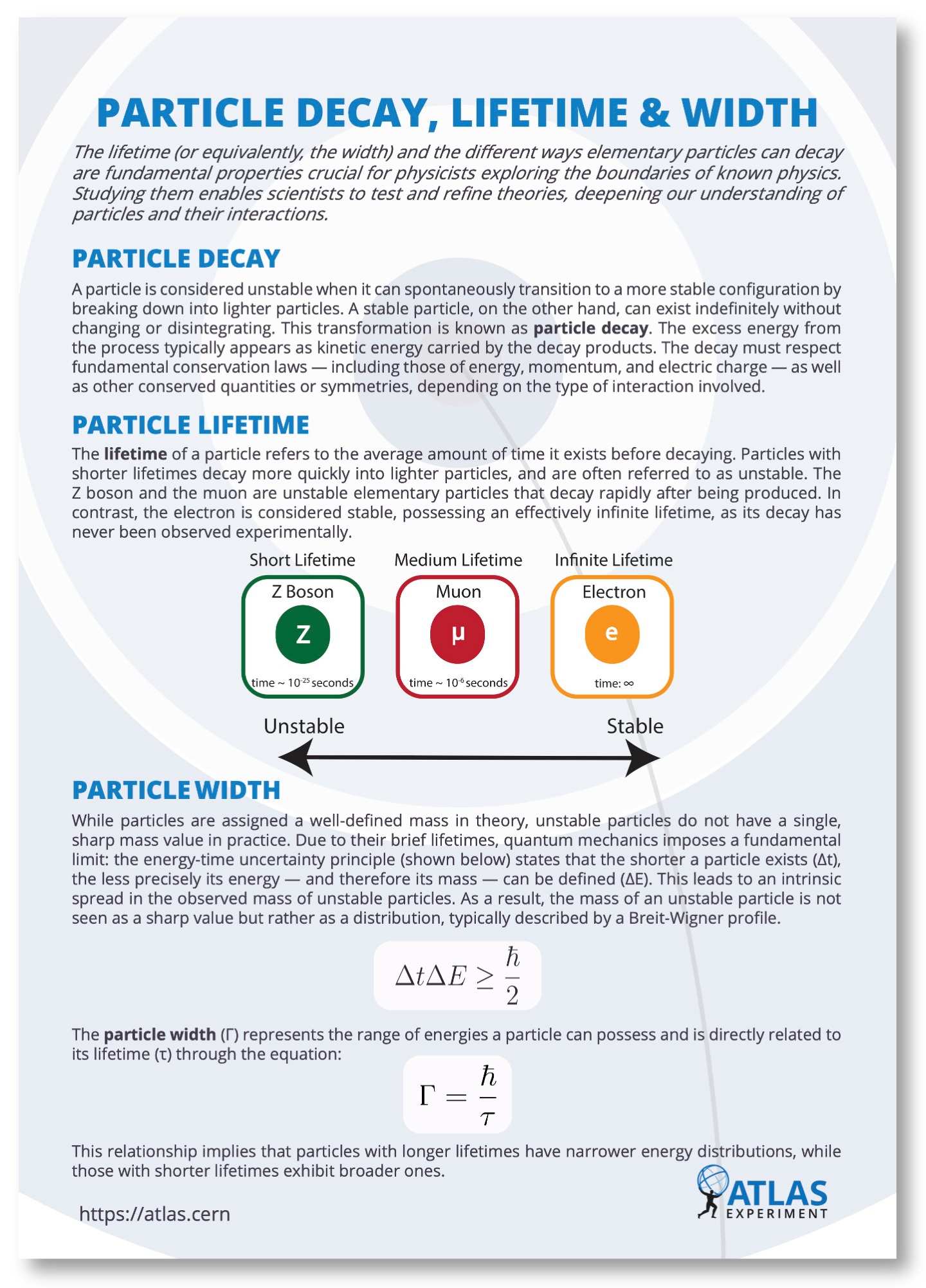
Particle Decay, Lifetime & Width
The lifetime (or equivalently, the width) and the different ways elementary particles can decay are fundamental properties crucial for physicists exploring the boundaries of known physics.
Keywords: particle lifetimeDownload in English, Czech
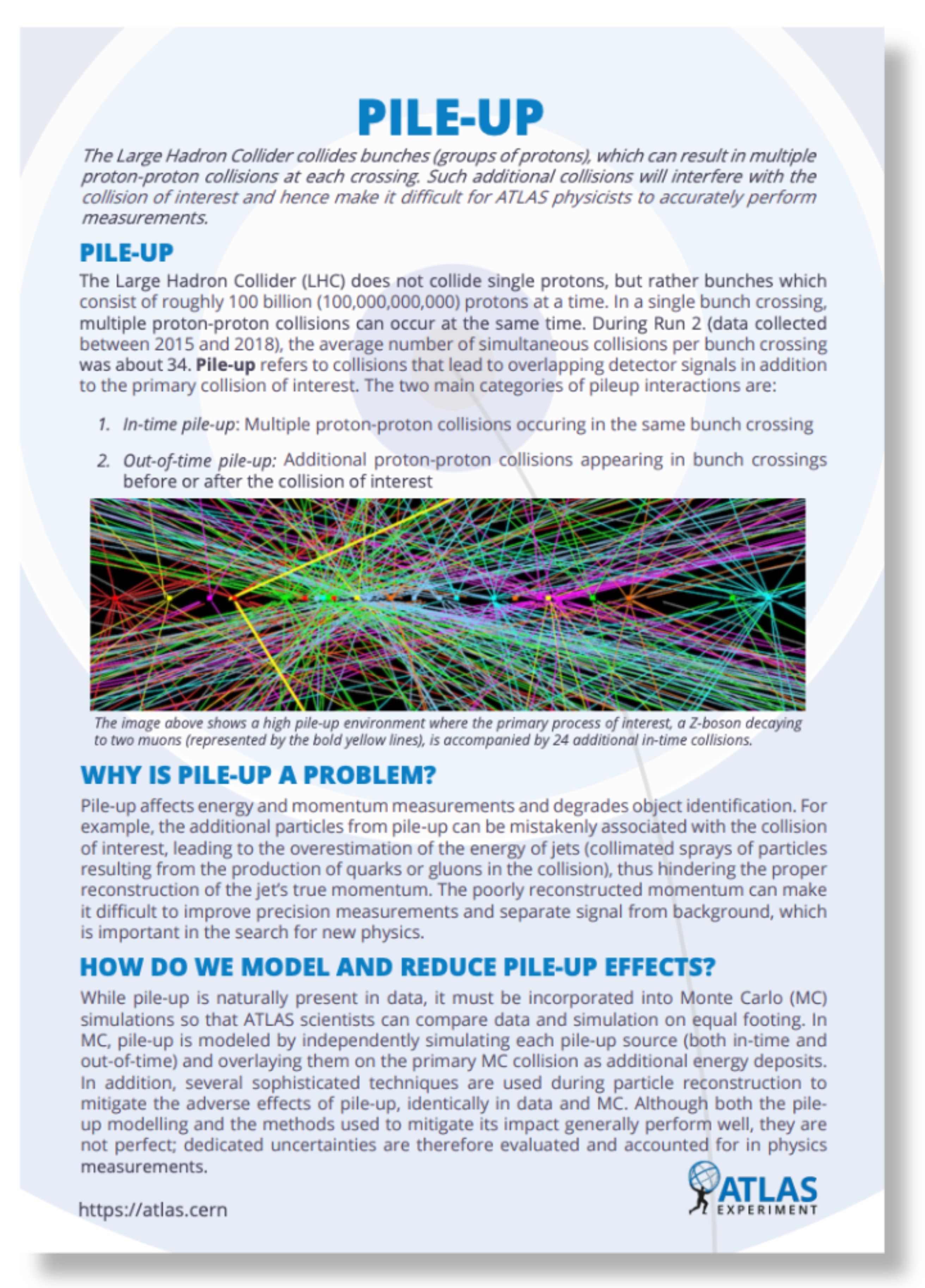
Pile-Up
The LHC collides bunches (groups of protons), which can result in multiple proton-proton collisions at each crossing. Such additional collisions are called pile-up.
Keywords: background, eventDownload in English, Czech
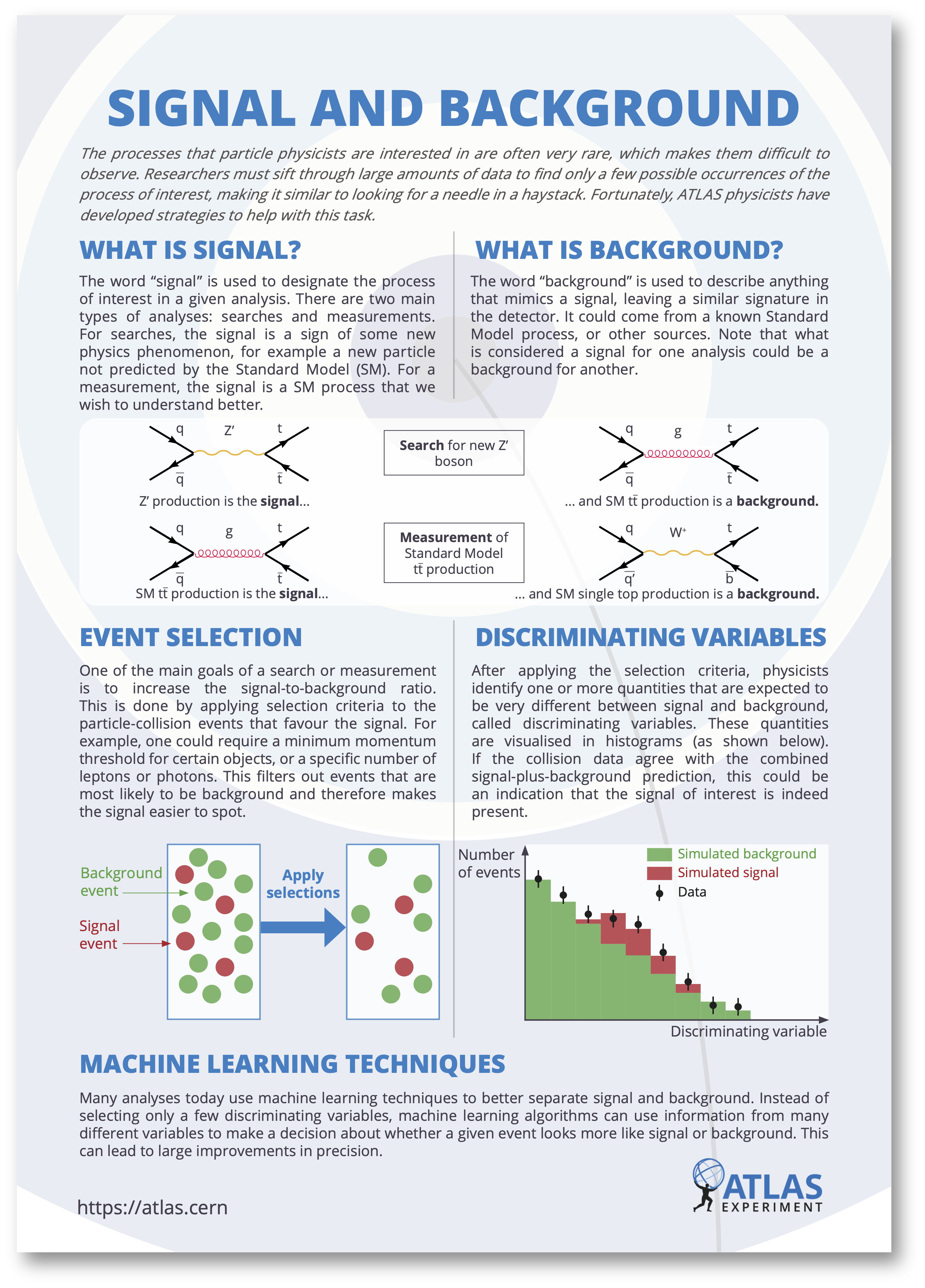
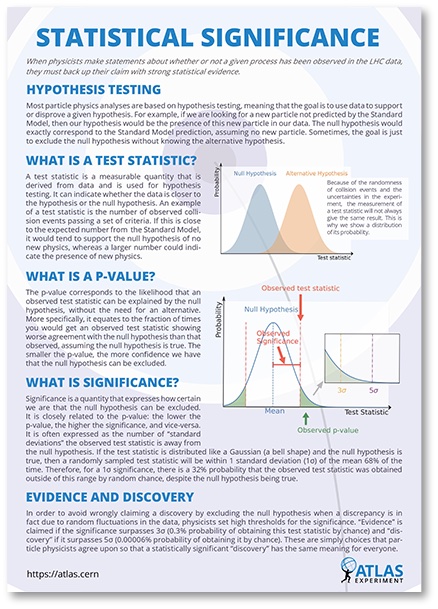
Statistical Significance
When physicists make statements about whether or not a given process has been observed in the LHC data, they must back up their claim with strong statistical evidence. This is often expressed in terms of standard deviations or the p-value.
Keywords: standard deviation, p-value, signal, backgroundDownload in English, Italian, German, Dutch, French, Czech
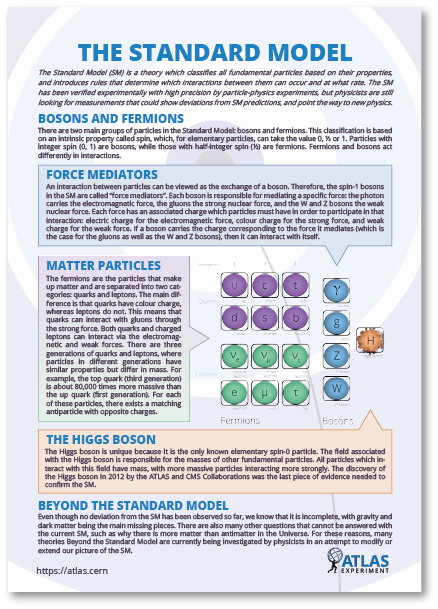
The Standard Model
All fundamental particles classified based on their properties! Deviations to the Standard Model can point the way to new physics.
Keywords: dark matter, standard model, higgs boson, fermion
Download in English, French, Spanish, German, Italian, Dutch, Czech
Credits and Terms of Use
ATLAS Experiment cheat sheets are free to download for personal and educational use. Content Copyright: ATLAS Experiment © CERN
- Text and project development: Elise Le Boulicaut, Valerie Buxbaum, Dave Van Wijk, Jammel Brooks, Mira Varma and Abdelhamid Haddad on behalf of the ATLAS Collaboration
- Translations: Elise Le Boulicaut (French), Daniel Trujillo (French, Spanish), Rebeca Gonzalez Suarez (Spanish), Lukas Kretschmann (German), Giada Mancini and Giuseppe Carratta (Italian), Dave Van Wijk (Dutch), Fani Henry (French), Ruben Schoeman (Dutch), Pavla Federicova (Czech)
- Background image: Ana María Rodríguez Vera on behalf of the ATLAS Collaboration
ATLAS Colouring Books
About the books
Enjoy free-to-download colouring books by the ATLAS Collaboration, ideal for kids (and adults) of all ages! In these books, you'll discover how experiments detect particles, what their properties are, and how scientists are working together to learn more about our Universe.
ATLAS Experiment
Colouring Book
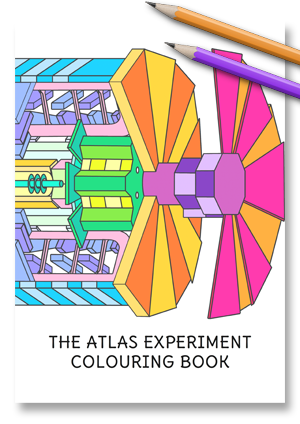
Available in 16 languages, the ATLAS Experiment colouring book introduces kids to the field of High-Energy Physics and the work being carried out by the ATLAS Collaboration.
Learning objectives:
-
ATLAS scientists work together to study particles, the basic building blocks of our universe.
-
ATLAS scientists use a detector to find and identify particles.
-
The ATLAS Collaboration is diverse. Anyone can be an ATLAS scientist.
-
The Standard Model and the Higgs Boson.
Particles of the Universe
Colouring Book
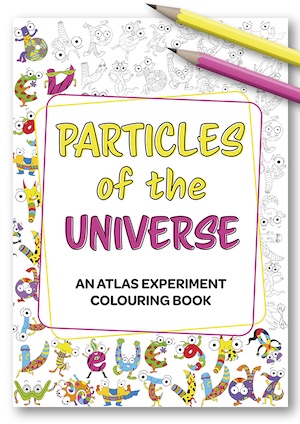
Everything around us is made up of tiny, elementary particles. In this colouring book, kids can meet all of the particles that scientists have discovered (so far!) and learn about the role they play in our Universe.
Learning objectives:
-
Matter is made of tiny elemental particles.
-
Particles are the building blocks of all matter and are responsible for forces.
-
Scientists use experiments to find and study particles.
-
There are different types of particles with different functions.
Downloads
Individual Page Examples
Credits and Terms of Use
The ATLAS Experiment Colouring book is free to download for personal and educational use. Content Copyright: ATLAS Experiment © 2021 CERN
Credits for the Particles of the Universe Colouring Book:
- Particle Illustrations by Carolina De Luca
- Additional Illustrations by Mariana Velho
- Text and Project Development by Katarina Anthony and Mariana Velho for the ATLAS Collaboration
Credits for the ATLAS Experiment Colouring Book:
- Illustrations by CERNland.net, Carolina De Luca and Rebecca Pitt
- Text by Katarina Anthony for the ATLAS Collaboration
- Project development by Veronica Ruberti and Katarina Anthony
- Pages 4-5; Characters of Bob and Betty: Designed by ovnii.it for CERNland.net
- Pages 9-11: Designed by Carolina De Luca, carolinadeluca.com
- Page 12: Designed by Rebecca Pitt, based on earlier work by Joao Pequenao for the exhibit www.the-higgs-boson-and-beyond.org
ATLAS Colouring Books & Activities
The Colouring Books
Enjoy free-to-download colouring books by the ATLAS Collaboration, ideal for kids (and adults) of all ages! In these books, you'll discover how experiments detect particles, what their properties are, and how scientists are working together to learn more about our Universe.
Upgrade Edition
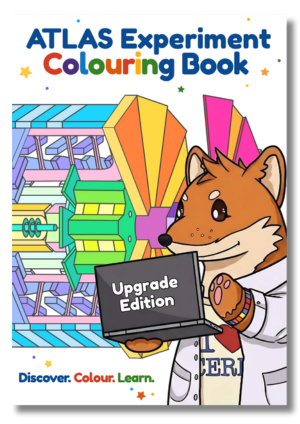
The Upgrade Edition of the ATLAS Experiment Colouring Book introduces kids to High-Energy Physics through the adventures of student Watty Whiskers and Professor Ducksworth. Kids will discover what it is like to be part of a global scientific team, working together to understand the fundamental building blocks of the Universe and upgrade the world’s largest particle detector for High-Luminosity LHC.
What kids will learn:
-
ATLAS is one of the world's largest scientific collaborations, bringing together thousands of people from around the globe.
-
The Universe is made of fundamental particles being studied and discovered by ATLAS scientists.
-
ATLAS scientists use an experiment to find and identify particles. They are upgrading the experiment with new detector technologies.
-
ATLAS is a generational experiment: the Higgs boson was discovered in 2012, and today new scientists are using the experiment to search for the next discoveries.
-
There are many ways to be an ATLAS scientist: from building detectors and studying particles to teaching students and working in the control room.
-
Scientists are made through learning, curiosity and teamwork. Anyone can become an ATLAS scientist.
Downloads
Particles of the Universe
Everything around us is made up of tiny, elementary particles. In this colouring book, kids can meet all of the particles that scientists have discovered (so far!) and learn about the role they play in our Universe.
Learning objectives:
-
Matter is made of tiny elemental particles.
-
Particles are the building blocks of all matter and are responsible for forces.
-
Scientists use experiments to find and study particles.
-
There are different types of particles with different functions.
Downloads
Original Edition
Available in 20+ languages, the original ATLAS Experiment colouring book introduces kids to the field of High-Energy Physics and the work being carried out by the ATLAS Collaboration.
Learning objectives:
-
ATLAS scientists work together to study particles, the basic building blocks of our universe.
-
ATLAS scientists use a detector to find and identify particles.
-
The ATLAS Collaboration is diverse. Anyone can be an ATLAS scientist.
-
The Standard Model and the Higgs Boson.
Downloads
Guide for Parents and Teachers

This guide will help parents and teachers discuss the subjects addressed in the ATLAS Colouring Books. It isn’t an encyclopaedia of all of particle physics; instead, it provides a general overview of both the science and the research for non-experts. The guide will enhance your understanding of the field so you can feel more comfortable in sharing your knowledge with kids. It will also provide you with a list of resources in case you want to learn more about some topics.
Questions addressed:
- What is particle physics?
- How does the Large Hadron Collider work?
- What is the Standard Model of Particle Physics?
- What are particle generations and colour charge?
- What about antiparticles and cosmic rays?
- Have physicists discovered everything?
- How can you work at ATLAS?
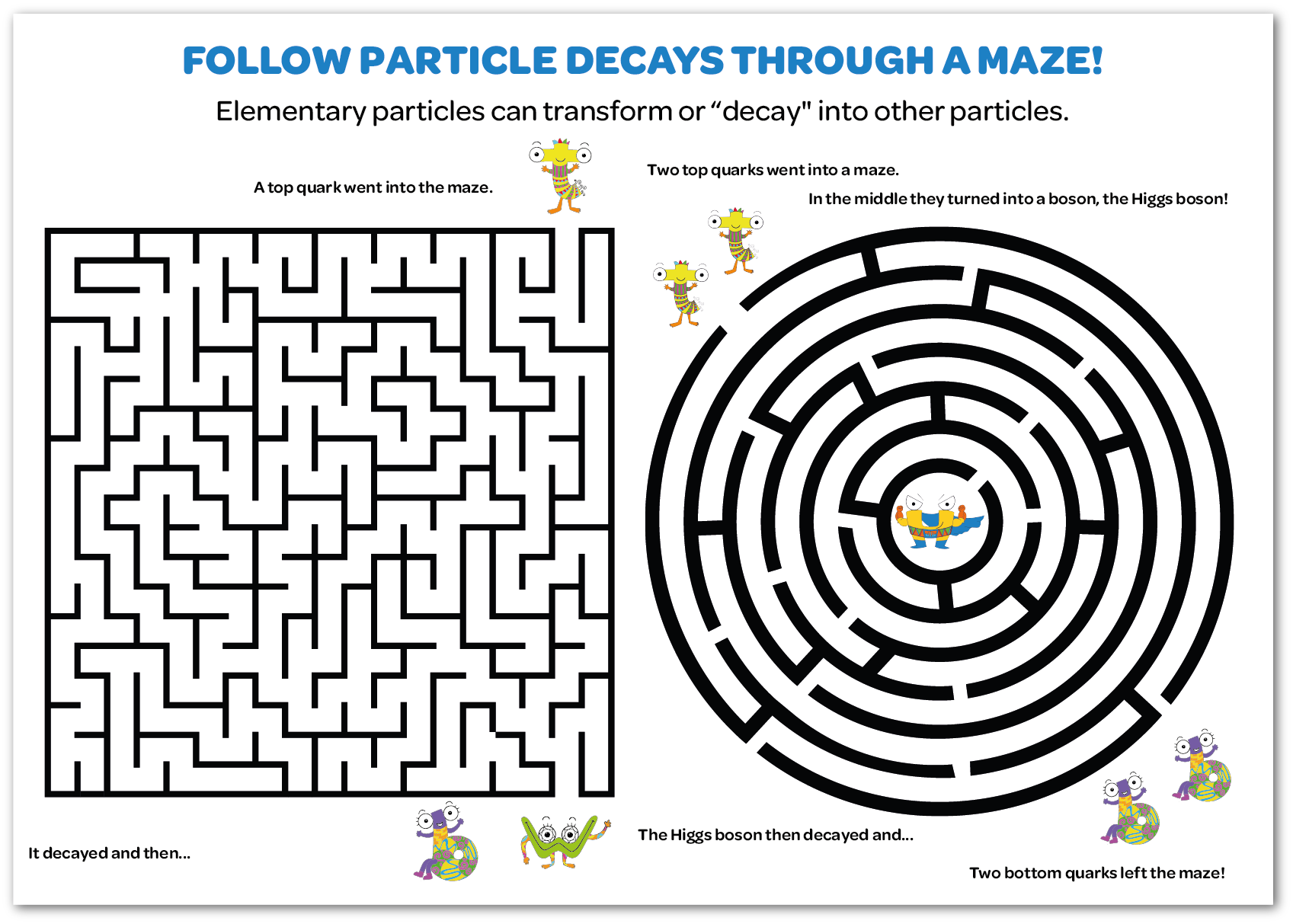
Activity Sheets
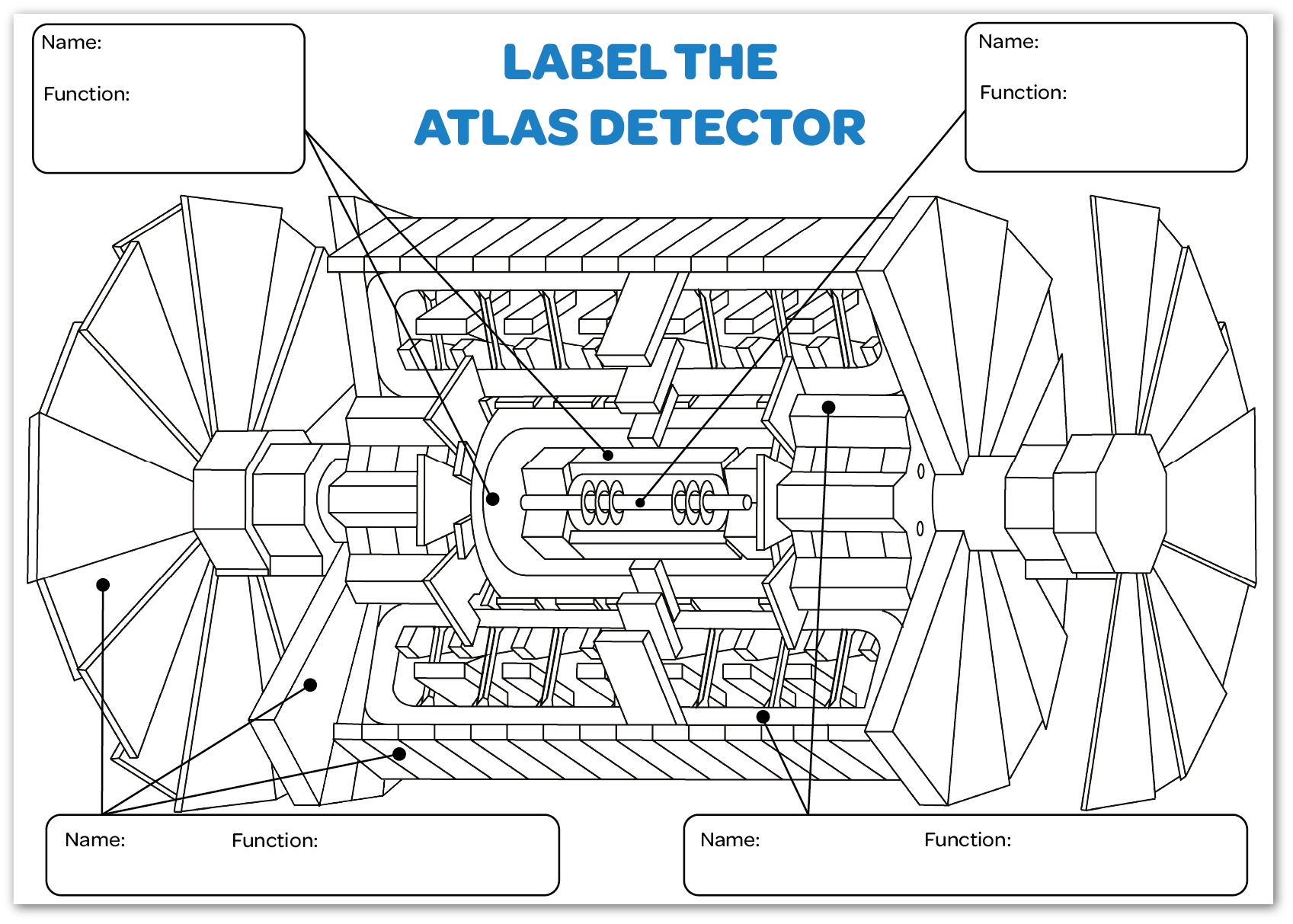
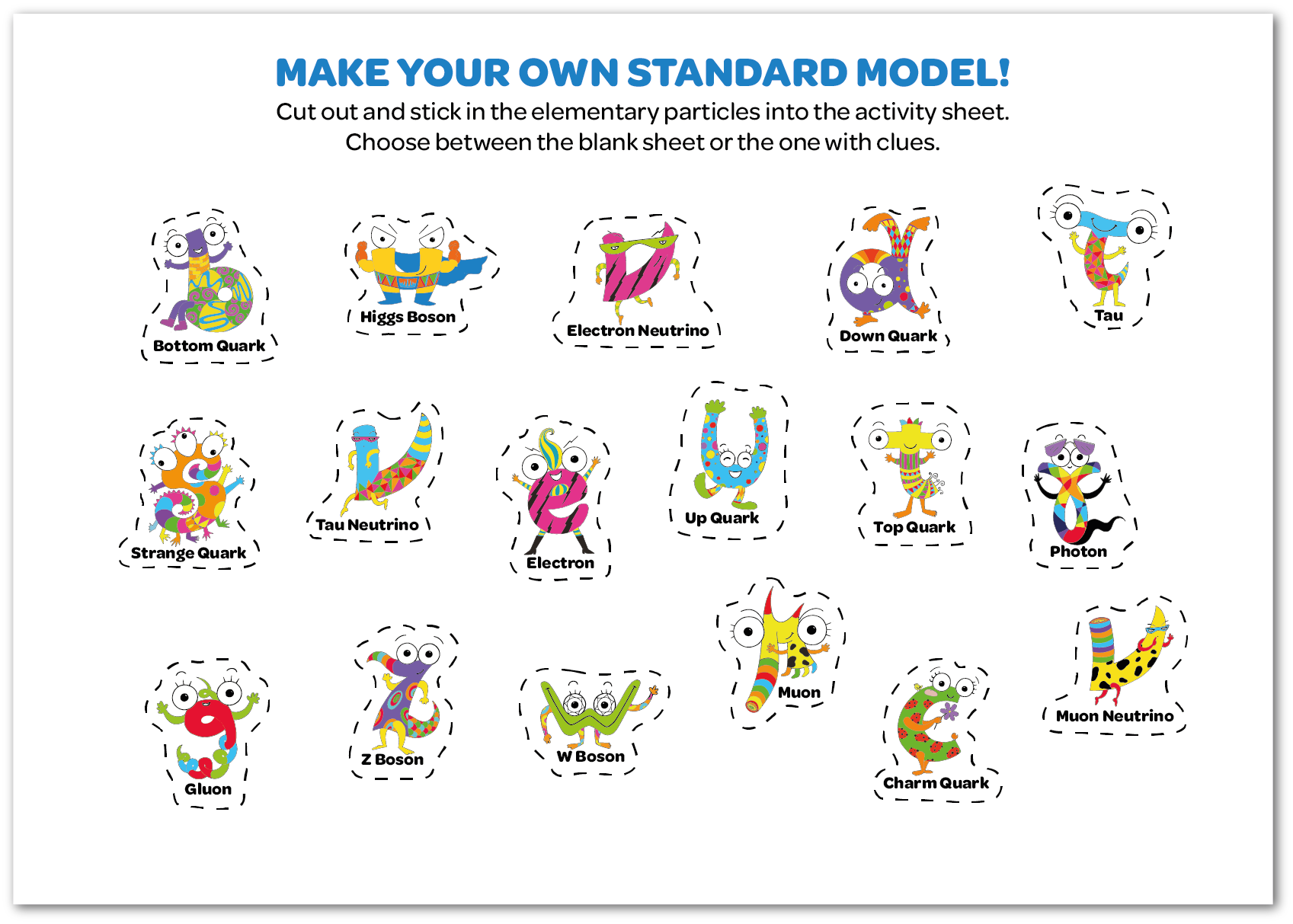
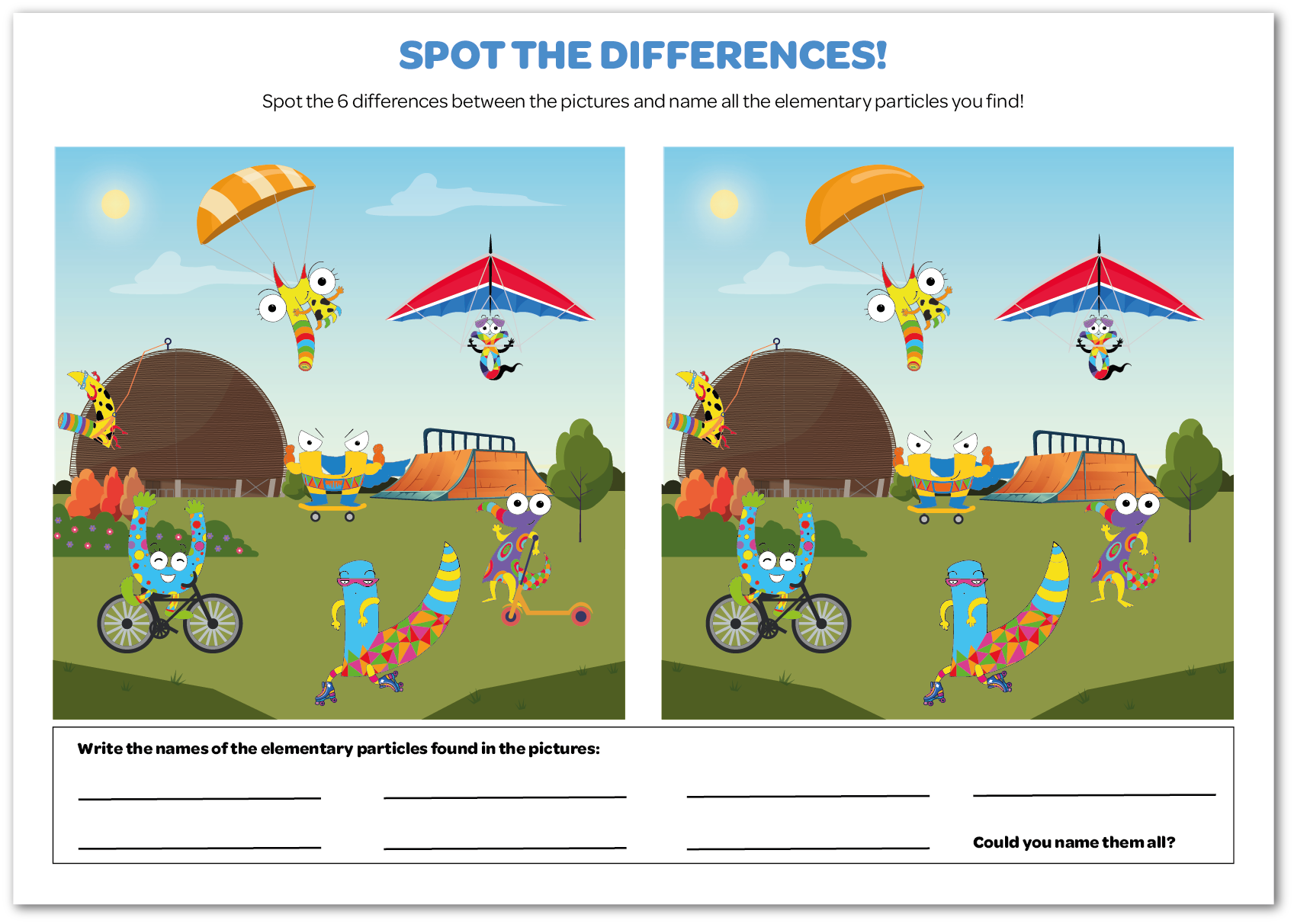
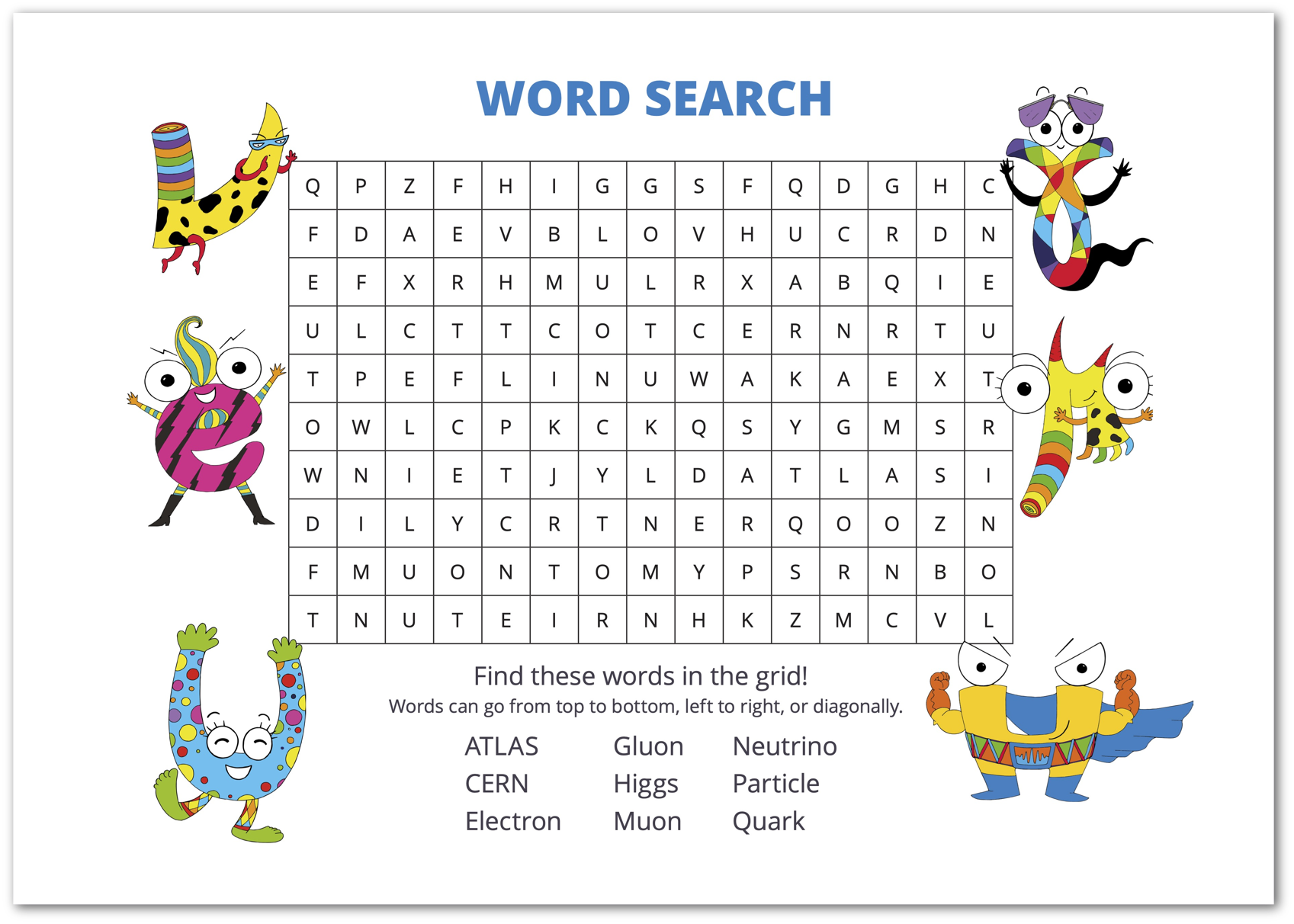
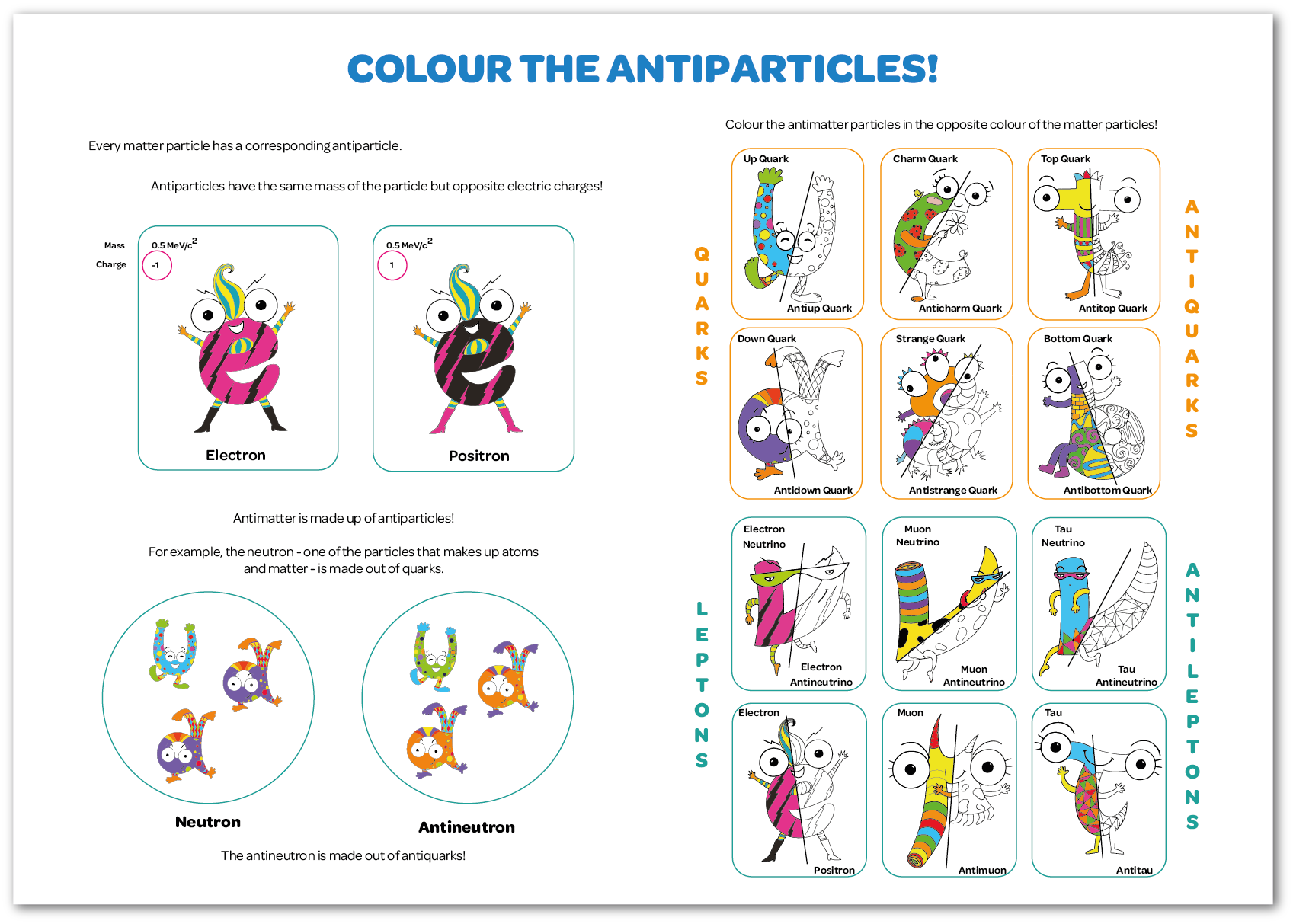
ATLAS Activity Sheets build upon concepts introduced in the ATLAS colouring books, allowing kids to cement their new understanding of particle physics and explore all-new topics. For ease of printing, these sheets are available in colour and black & white.
Credit and Terms of Use
The ATLAS Experiment Colouring book is free to download for personal and educational use. Content Copyright: ATLAS Experiment © 2022 CERN
Credits for the ATLAS Experiment Colouring Book (upgrade edition):
- Illustrations by Kelly Stanford
- Additional illustrations by Carolina Deluca (particles), and Rebecca Pitt & Katarina Anthony (ATLAS detector)
- Text by Katarina Anthony for the ATLAS Collaboration
- Project development by Elise Le Boulicaut Ennis & Katarina Anthony for the ATLAS Collaboration
Credits for the Particles of the Universe Colouring Book:
- Particle illustrations by Carolina De Luca
- Additional illustrations by Mariana Velho
- Text and Project development by Katarina Anthony and Mariana Velho for the ATLAS Collaboration
Credits for the ATLAS Experiment Colouring Book (original edition):
- Illustrations by CERNland.net, Carolina De Luca and Rebecca Pitt
- Text by Katarina Anthony for the ATLAS Collaboration
- Project development by Veronica Ruberti and Katarina Anthony
- Pages 4-5; Characters of Bob and Betty: Designed by ovnii.it for CERNland.net
- Pages 9-11: Designed by Carolina De Luca, carolinadeluca.com
- Page 12: Designed by Rebecca Pitt, based on earlier work by Joao Pequenao for The Royal Society exhibit "The Higgs boson and beyond."
Credits for the Guide for Parents and Teachers:
- Text and Project Development by Mariana Velho for the ATLAS Collaboration
- Particle illustrations by Carolina De Luca
- Photos courtesy of CERN
Credits for the Activity Sheets:
- Project development & additional illustrations by Mariana Velho for the ATLAS Collaboration
- Particle illustrations by Carolina De Luca
- Additional Content Creation by Elise Le Boulicaut Ennis
Virtual Visits from South America
Pagination
- Previous page ‹‹
- Page 1
- Page 2
- Page 3
- Current page 4
- Next page Next ›
Virtual Visits from North America
Pagination
- Previous page ‹‹
- Page 1
- Page 2
- Current page 3
- Next page Next ›
Virtual Visits from Europe
Pagination
Virtual Visits from Asia
Pagination
- Previous page ‹‹
- Page 1
- Current page 2
- Next page Next ›
ATLAS Virtual Visits
A Virtual Visit is a live video connection by a group (typically a classroom) to the ATLAS Experiment at CERN. A guide, who is a scientist or an engineer working on the experiment, meets visitors from the control room or (during planned LHC shutdowns) from the detector underground.
During a Virtual Visit, guides will
- Introduce themselves and describe their work in particle physics.
- Present CERN, the Large Hadron Collider (LHC), and the ATLAS experiment, including its goals and accomplishments.
- Invite questions from the audience.
We recommend audiences prepare questions ahead of time. This can be facilitated by viewing this introductory video.
Group Virtual Visits
Groups of at least 10 visitors (such as classrooms) can schedule their own visit by completing this form.
Upcoming Virtual Visits
Num evento conjunto da Universidade Federal Fluminense e a Universidade Estadual Paulista teremos uma visita virtual ao experimento ATLAS, onde os estudantes, participando numa Master Classe pra detectar partículas produzidas nas colisões do LHC, poderão ver partes do detector ATLAS e discutir com especialistas da área. A visita é organizada no Brasil pelo professor Nelson Barelo e na Suíça pelo pesquisador Denis Oliveira Damazio e acontecerá no dis 24 de setembro de 2026 as 9:00 no horário de Brasília. In a joint event hosted by the Federal Fluminense University and São Paulo State University, there will be a virtual tour of the ATLAS experiment. Students participating in a Masterclass to detect particles produced in LHC collisions will be able to view parts of the ATLAS detector and discuss the subject with experts in the field. The visit is organized in Brazil by Professor Nelson Barelo and in Switzerland by researcher Denis Oliveira Damazio, and it will take place on September 24, 2026, at 14:00 Geneva time.
As part of the Science Camp, the 25 participating girls will take part in a virtual visit to the ATLAS Experiment at CERN. The visit will introduce them to cutting-edge particle physics research, the ATLAS detector, and the work of scientists and engineers at CERN, while allowing them to learn about research and career paths in science.
This virtual visit will be part of the activities planned for the course on "The Evolution of Physics" offered at Westlake University.
This virtual visit is organised for Higher Physics students at a small school in Scotland. The students will begin their study of particle physics around the time of the visit. Some students have already been introduced to the Standard Model, while others may have this visit as their first opportunity to explore it.
The visit will offer students an engaging introduction to particle physics, helping them connect ideas they encounter in the classroom with research and discoveries in Particle Physics.
Open Virtual Visits
We also schedule periodic open visits that can be joined by individuals or small groups. You can find them in the list on this page. Select the Open Virtual Visit of the date/time/language that best fits, click on it and register.